Out of Shape After the Military? How Veterans Restart Without Getting Hurt
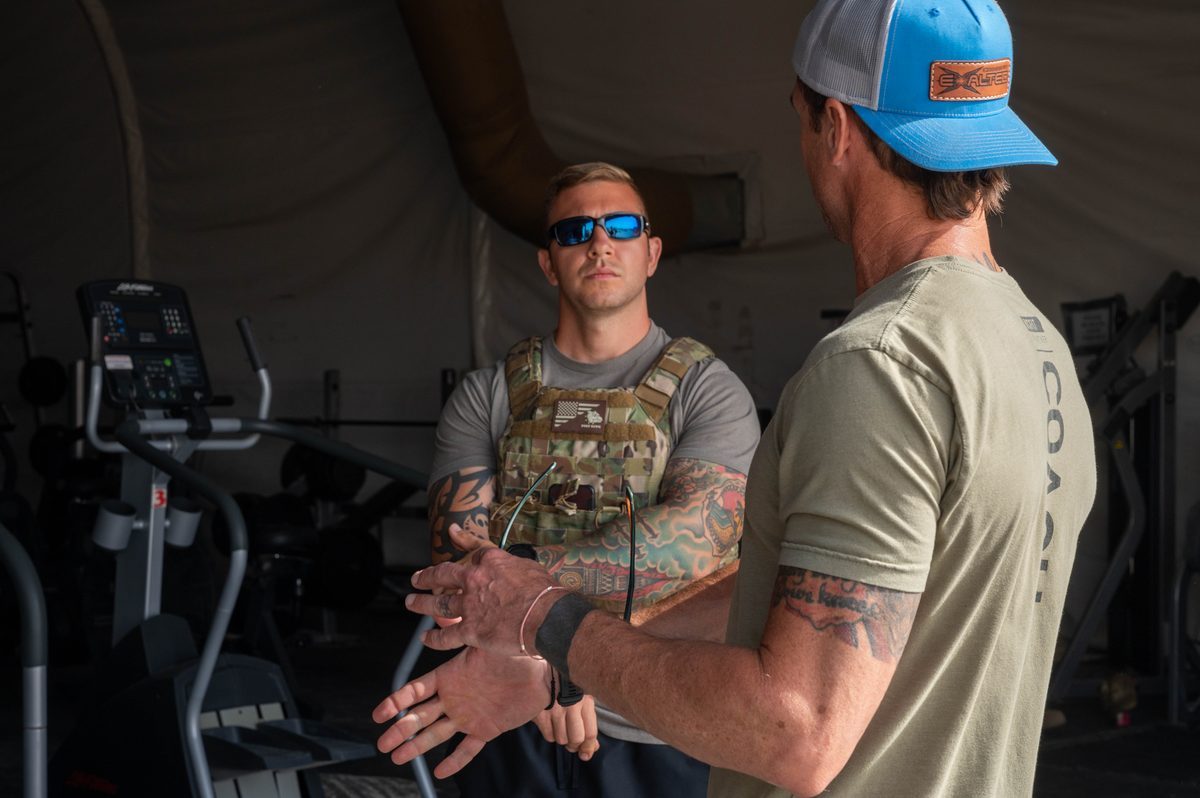
You used to be in the best shape of your life, and now a flight of stairs has opinions. If that's you, it's common, it isn't a character flaw, and it's fixable. I'm a U.S. Army veteran and I've coached service members for 12+ years. Here's how I'd restart.
Why it happens: the structure leaves with the uniform
In service, someone told you when to train, set the standard, and noticed when you weren't there. When you leave, all of that goes at once, and you're expected to run it yourself.
The research backs this up. In a Millennium Cohort Study analysis of 37,464 former service members who left the military between 2001 and 2016, physical activity declined steadily after separation. Nearly 200,000 veterans make that transition every year, according to a Boston University summary of the research.
The surprising part: hard training in uniform didn't protect people. Veterans who exercised at demanding levels during service faced the steepest decline in physical and mental health outcomes during the transition. The takeaway is that keeping a routine going matters more than how fit you used to be.
The mistake almost everyone makes: restarting at your old level
Most veterans restart with the workout they did in uniform: a big PT circuit, a hard run, a pile of pull-ups. Stew Smith, a former Navy SEAL who has answered veterans' fitness questions for years, makes the same point: that's where many people go wrong, and he recommends a true beginner plan for the first few weeks.
Your memory of that workout is ahead of what your body can do today. Tendons and joints adapt more slowly than your motivation does, and an injury in week two ends the restart.
A restart plan that works
- Get cleared if it's been a while. If you haven't trained in years, have old injuries, or have a health condition, check with your doctor first and ask what to avoid.
- Start smaller than your ego wants. Three sessions a week, 30 to 40 minutes. Basic movements: a squat, a hinge, a push, a pull, a carry. Easy cardio like walking or a bike. Finish every session feeling like you could have done more.
- Put the structure back. Pick fixed days and times and put them on your calendar like formation. Tell someone who will ask whether you showed up.
- Review once a week. What did you do, how did you sleep, what hurt, what's next? Adjust from facts, not feelings.
That fourth step is the one most people skip, and it's the one I build my coaching around: a weekly check-in with a questionnaire, progress photos, and weight, so your plan evolves as you progress.
What your first four weeks can look like
- Week 1: Learn the movements at light weight. Two or three short sessions. The goal is to show up, not to be sore.
- Week 2: Same sessions, with a little more weight or a few more reps where it felt easy.
- Week 3: Add a third session if you hit the first two on schedule. Add easy cardio on off days.
- Week 4: Check in with yourself: sleep, soreness, energy, joints. Pick one thing to improve next month.
How to know when to push harder
When you've hit your scheduled sessions for three or four weeks in a row, nothing hurts beyond normal soreness, and the last reps feel manageable, add a little. More weight, more sets, or a harder variation, but change one thing at a time.
Three more restart mistakes
- Chasing soreness as proof. Being wrecked for three days doesn't mean it worked. It usually means you'll skip the next session.
- Skipping the warm-up. You used to do one automatically. Ten minutes of easy movement before you train is cheap insurance.
- Going it alone. In service, someone expected you at the formation. Without that, most people drift. Find your replacement for it.
Food and sleep: don't try to outwork them
You don't need a perfect diet. Pick two things: protein at every meal, and a fixed bedtime. Add the rest later. Trying to change everything at once is how restarts die by week three.
What if you're dealing with old injuries?
That changes how you train, not whether you train. Read Training With Injuries From Service for a framework. If weight is part of what's bothering you, see Why Veterans Gain Weight After Service.
Frequently asked questions
How long does it take to get back in shape after the military?
It depends on how long you've been away, your injuries, and how consistent you are. Most people feel a difference in energy and performance within the first few weeks, and visible changes take longer. I won't promise a number, because the biggest factor is showing up week after week.
Should I start with the workouts I did in service?
Usually not. Your memory of those workouts is ahead of what your body can do today. Start smaller than you think you need to, keep every session short of your limit for the first few weeks, and build from there.
Do I need to see a doctor before I start?
If it's been years since you trained, you have old injuries, or you have a health condition, yes. Ask what to avoid. I'm a coach, not a doctor, so I build the plan around what you're cleared to do.
Sources
- Waldhauser KJ, Hives BA, Liu Y, et al. Military Veterans' Psychological Health and Physical Activity After Separation From Service. American Journal of Preventive Medicine, 2025.
- Movement and Mental Health After the Military. Public Health Post, Boston University School of Public Health, March 2026.
- Ask Stew: Former Marine Who Wants to Rejoin Military Must Lose Weight First. Military.com.
This article is general education, not medical advice. Talk to your doctor before starting or changing an exercise or nutrition program. I'm a coach, not a doctor.